Other Plastic Monofilament, Cross sectional Size > 1mm, for Medical Use
CN → US| HS Code | Tariff Rate | Origin | Destination | Doc |
|---|---|---|---|---|
| 3916903000 | 41.5% | CN | US | Official Doc |
| 3916905000 | 40.8% | CN | US | Official Doc |
Product Images
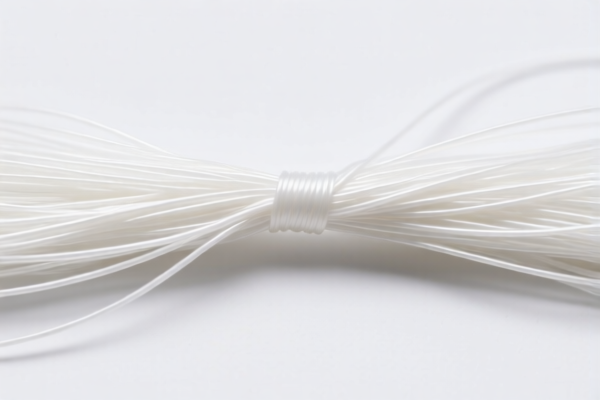
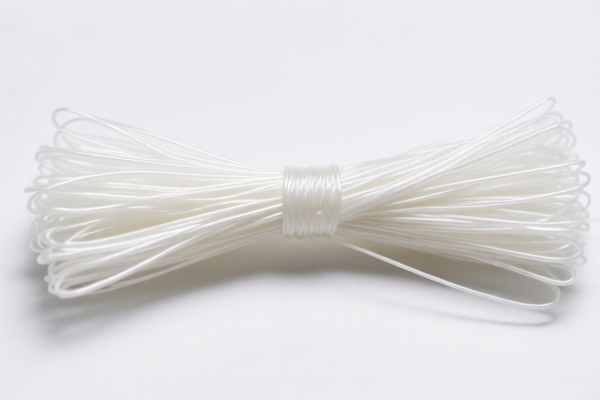
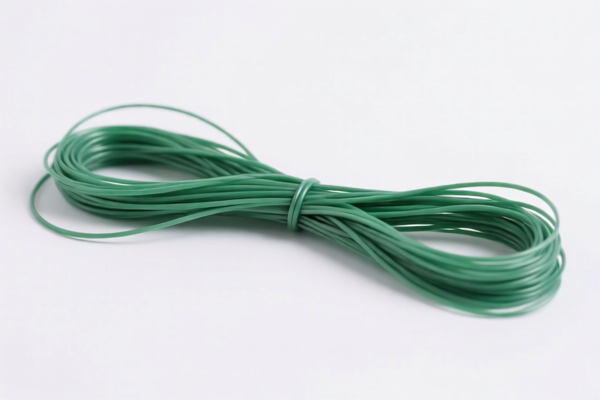
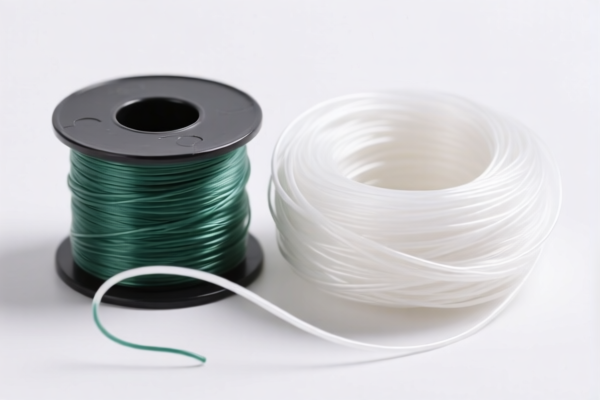
AI Analysis
🏥 Medical Plastic Monofilament | Cross-Section > 1mm
🌐 HS Code Reference & Customs Clearance Guide | 2026 Latest Tariff Analysis | Professional Clearance Strategy
📌 I. Product Definition & Classification: Do You Really Understand "Medical Plastic Monofilament"?
Plastic Monofilament refers to a single continuous fiber of plastic material. In international trade, classification depends heavily on its cross-sectional size and specific material composition, even when the end-use is identical (Medical).
Key Distinction for This Product: * Cross-Section Size: Explicitly stated as > 1mm. This excludes fine fibers or tapes, placing it firmly in Chapter 39 (Plastics). * End-Use: Medical Use (e.g., sutures, implants, surgical meshes). Note: While "Medical Use" describes the application, it does not automatically change the HS Code from the general plastic monofilament category unless a specific medical device heading (Chapter 90) applies, which is rare for raw monofilaments. * Material Nuance: The slight tax variation in the data suggests a distinction in plastic resin type (e.g., Polyethylene vs. Polypropylene/Polyester), even if both are >1mm.
⚠️ Critical Classification Point:
- HS 3916.90.50.00: Typically covers other plastic monofilaments (often associated with specific polymer types like PE or PP not listed elsewhere).
- HS 3916.90.30.00: Often covers monofilaments of specific plastics like PET or other polyester-based plastics.
- Both share the same tax burden, but precise material documentation is required to avoid misclassification disputes.
📦 II. HS Code Classification Details (2026 Latest Tariff Authority Comparison)
| HS Code | Product Description | Applicable Scenario | Material/Shape Note |
|---|---|---|---|
3916.90.50.00 |
Other plastic monofilaments, cross-section > 1mm | Medical sutures, implants using general plastic resins | Plastic, Monofilament, >1mm |
3916.90.30.00 |
Other plastic monofilaments, cross-section > 1mm | Medical applications using specific polymer types (e.g., PET variants) | Plastic, Monofilament, >1mm |
🔍 Key Insight:
- Both codes describe "Other Plastic Monofilaments" with a cross-section greater than 1mm.
- The "Medical Use" is a functional description and does not conflict with Chapter 39 classification.
- The difference between.50and.30lies in the sub-heading for specific plastic materials (e.g., polyester vs. other plastics). Always verify the exact resin type (e.g., PP, PE, PET) in your Material Safety Data Sheet (MSDS).
💰 III. 2026 Latest Tariff Rate Breakdown (Including Surtaxes & Policy Add-ons)
✅ Applicable Country: United States (US)
✅ Origin: China (CN)
✅ Effective Time: Current tariffs apply (Section 301 & IEEPA)
🎯 1. 3916.90.50.00 — Other Plastic Monofilaments (>1mm, General Plastic)
| Item | Details |
|---|---|
| Basic Tariff | 5.8% (Ad Valorem) |
| Section 301 Surtax | +25.0% |
| Section 122 / IEEPA Surcharge | +10.0% |
| Total Effective Tax Rate | 40.8% |
| Tax Calculation | CIF Value × 40.8% |
| De Minimis Exemption | ❌ Not Eligible (Deny de minimis for Section 301 goods) |
| Legal Basis Path | USITC:3916.90.50.00 → FOOTNOTE:Section301 → IEEPA:10% |
📌 Explanation:
- The 5.8% is the standard Most Favored Nation (MFN) rate for other plastic monofilaments.
- The 25% is the standard Section 301 tariff on Chinese plastics.
- The 10% is an additional surcharge (often linked to specific trade actions or Section 122 provisions if applicable).
- Total: 40.8%. This is a high-cost item for importers.
🎯 2. 3916.90.30.00 — Other Plastic Monofilaments (>1mm, Specific Plastic Type)
| Item | Details |
|---|---|
| Basic Tariff | 6.5% (Ad Valorem) |
| Section 301 Surtax | +25.0% |
| Section 122 / IEEPA Surcharge | +10.0% |
| Total Effective Tax Rate | 41.5% |
| Tax Calculation | CIF Value × 41.5% |
| De Minimis Exemption | ❌ Not Eligible |
| Legal Basis Path | USITC:3916.90.30.00 → FOOTNOTE:Section301 → IEEPA:10% |
📌 Note:
- The base rate is slightly higher (6.5% vs 5.8%), resulting in a total of 41.5%.
- Both classifications are subject to the same surcharges because the origin is China and the product is a plastic monofilament.
- Medical use does not grant tariff exemption under current US trade policy.
🛠️ IV. Customs Clearance Practical Advice (Real-World Pitfall Guide)
✅ 1. Required Documentation Checklist (Non-Negotiable)
| Document | Mandatory? | Purpose |
|---|---|---|
| ✅ Product Specification Sheet | ✔️ | Must explicitly state: "Plastic Monofilament," "Cross-section > 1mm," and "Medical Use." |
| ✅ Material Composition Report | ✔️ | Critical for distinguishing between 3916.90.30 and 3916.90.50. Include resin type (e.g., Polypropylene, PET). |
| ✅ Medical Device Intended Use Statement | ✔️ | Confirms end-use but clarifies it is a raw material/component, not a finished device. |
| ✅ Commercial Invoice | ✔️ | Must match HS Code description exactly. Avoid vague terms like "Plastic String." |
| ✅ Packaging List | ✔️ | Show weight and dimensions. |
| ✅ Certificate of Origin | ✔️ | Confirm CN origin to apply correct Section 301 rates. |
✅ 2. Declaration Tips (Key Mantra)
🔥 "Exact Shape, Exact Size, Exact Material! No Ambiguity, No Delays!"
| Scenario | Correct Declaration | Wrong Practice |
|---|---|---|
| Medical Sutures (Raw) | 3916.90.50.00 or .30 + "Medical Use" |
Declare as "Textile Yarn" → Misclassification |
| Cross-section ≤ 1mm | Incorrect! Must use different subheading. | Ignore size threshold → Audit Risk |
| Non-Medical Industrial Use | Same HS Code, different description. | Confuse with "Filamentary Fabric" → Wrong Chapter |
✅ 3. Special Handling
| Situation | Recommendation |
|---|---|
| OEM Medical Implants | Provide end-user certificate to prove medical application, but do not expect tariff reduction. |
| Hybrid Products (e.g., Coated Monofilament) | Ensure coating does not change the essential character. If coating is >50% weight, re-evaluate classification. |
| Pre-Clearance Ruling | Highly recommended due to the 40%+ tax rate. Request an Advance Ruling from CBP to lock in the HS Code. |
🌍 V. Global Market Comparison (2026 Latest)
| Country/Region | Recommended HS Code | Tariff (China Origin) | Key Requirements | Notes |
|---|---|---|---|---|
| 🇺🇸 USA | 3916.90.50.00 / .30 |
40.8% / 41.5% | Section 301 + IEEPA | Highest duty burden. |
| 🇨🇳 China | 3916.90.50.00 |
~10-13% | None | Low import duty if exporting from China to China (rare for this context). |
| 🇪🇺 EU | 3916.90.90 |
~6.5% | CE Marking (if device), REACH | No Section 301 equivalent. Lower than US. |
| 🇨🇦 Canada | 3916.90.90.00 |
~5.5% | Health Canada Approval | Significant savings vs. US. |
| 🇯🇵 Japan | 3916.90.00.0 |
~5-6% | PSE (if electrical), MHLW | Competitive market. |
📌 Conclusion:
- The US is the most expensive market for this product due to Section 301 and IEEPA surcharges.
- Medical use does not exempt plastic monofilaments from tariffs in the US.
- Consider supply chain diversification if targeting the US market to avoid the ~41% duty.
📌 VI. Common Mistakes & Pitfalls (Lessons Learned)
❌ Mistake 1: Declaring as "Medical Device" under Chapter 90.
👉 Consequence: CBP may reject as incomplete or misclassified. Raw monofilaments are plastics (Ch. 39), not finished devices.
👉 Result: Delay, fines, or forced reclassification.
❌ Mistake 2: Ignoring "Cross-Section > 1mm".
👉 Consequence: If ≤1mm, it falls under different subheadings with different rates.
👉 Result: Tax miscalculation.
❌ Mistake 3: Vague Description ("Plastic Wire").
👉 Consequence: CBP may apply the highest general rate for plastics (~25%+).
👉 Result: Overpayment or audit.
✅ Correct Practice:
"Plastic Monofilament, Cross-Section > 1mm, Made of [Specific Resin], for Medical Suture Use, Non-Woven, Uncoated."
🎯 VII. Conclusion: Precision in Classification, Savings in Compliance
🎯 Remember the Mantra:
🔹 "Size Matters (>1mm), Material Defines Code, US Tariffs are High!"
🔹 "40.8% to 41.5% is the price of precision. Ambiguity costs more."
📌 Pro Tip:
If your product is originating from Vietnam, Malaysia, or Thailand, you may avoid the 25% Section 301 and 10% IEEPA surcharges, potentially reducing the total tax to ~5-7%.
✅ Recommendation:
📞 Consult a licensed customs broker for an Advance Ruling.
🚀 Optimize supply chain to mitigate the ~41% US tariff burden.
✨ Professional Clearance Starts with Accurate Classification!
💼 Every Percent of Tax Saved is Pure Profit!
Customer Reviews
About HS Code Classification
The Harmonized System (HS) is an internationally standardized nomenclature developed by the World Customs Organization (WCO) to classify traded products. Over 200 countries use the HS system as the basis for customs tariffs, trade statistics, and import/export regulations.
Each HS code follows a hierarchical structure:
- Chapter (2 digits) — Broad category of goods (e.g., Chapter 84: Machinery and Mechanical Appliances)
- Heading (4 digits) — More specific grouping within the chapter
- Subheading (6 digits) — Internationally standardized breakdown, used by all WCO member countries
- National subdivisions (8-10 digits) — Country-specific extensions for further classification, such as US HTSUS 10-digit codes
Correct HS code classification is essential for smooth customs clearance, accurate duty payment, and compliance with trade regulations. Misclassification can lead to customs delays, overpayment of duties, or penalties.
When importing from CN to US, the applicable tariff rates may include:
- Most-Favored-Nation (MFN) rate — The standard duty rate applied to WTO members
- General rate — Applied to countries without trade agreements
- Trade remedy duties — Additional tariffs such as Section 301 (anti-dumping), Section 232 (national security), or countervailing duties
The information provided on this page is for reference purposes only. For official classification, please consult with your local customs authority or a licensed customs broker.